
Hooded Oriole
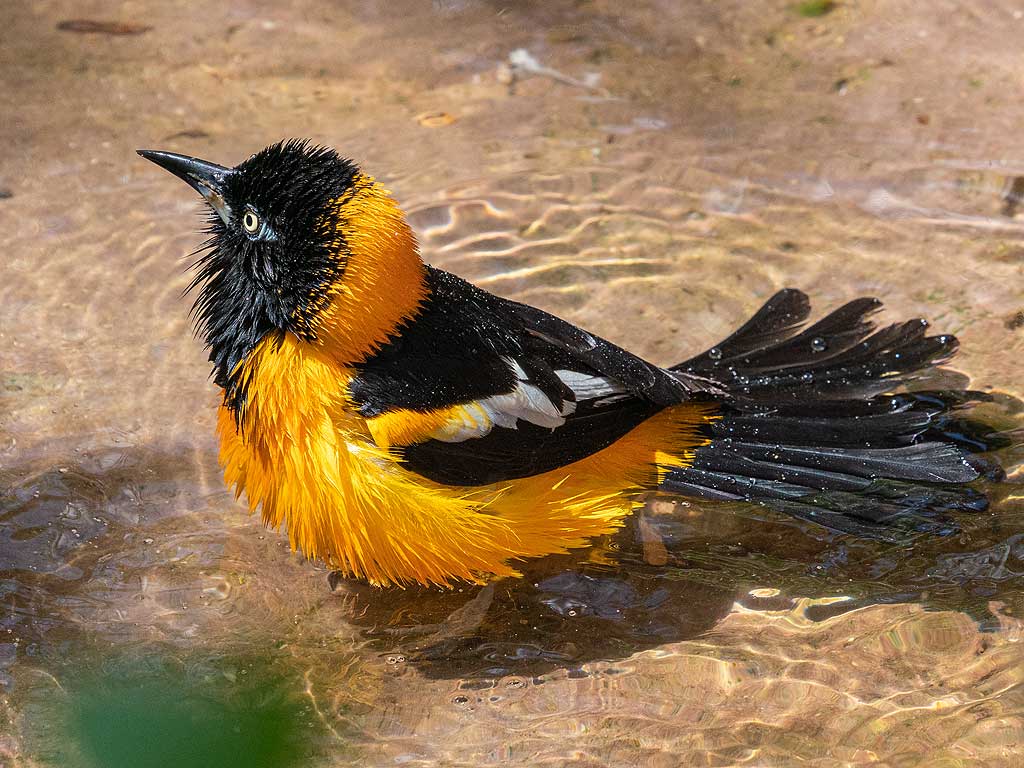
Black and brilliant yellow-orange flash across the sky when male Hooded Orioles dash through open woodlands and yards of the southwestern U.S. Following close behind are the pale yellow females.
Sometimes called "palm-leaf orioles," these orioles "sew" their hanging nests onto the undersides of palm fronds. They often stay hidden while foraging, but their large, slender shape and nearly constant chatter usually give them away. Hooded Orioles also use hummingbird feeders, awkwardly bending or hanging upside down to drink.
Backyard Tips
Try attracting Hooded Orioles to your yard with oranges, sugar water, or jelly. Slice oranges in half and secure them to a post or other platform. Or hang up an extra hummingbird feeder with slightly larger holes to allow these larger birds to access the sugar water. Use the same proportions you would for hummingbirds: one part table sugar dissolved in four parts water. Be sure to dispose of any fruit that becomes moldy because some molds create toxins that are harmful to birds.